Resources/First patients in Morocco/New medical practice in Morocco: how do you attract your first patients?
New medical practice in Morocco: how do you attract your first patients?
Three complementary assets for a practice open less than two years: an educational presence, a useful website, and a well organized contact pathway.
Start here
Complete guide for choosing, implementing, and keeping AI automation useful after launch.
Mohamed Amine Saada, Forteuno Web
Published
Editorial status: Educational content. Should be validated by the healthcare professional and against the Order's rules before publication or any campaign.
Opening a practice is not enough to make it visible. A "beginner" in this guide is a doctor who has just opened their own practice or center, or has run it for less than two years. The problem is usually not a lack of medical skill: it is that the patients who need that skill do not yet know where to find it.
This guide does not promise a first position on Google or a specific number of appointments. It offers three complementary assets: an educational presence, a useful website, and a well organized contact pathway.
“Before publishing anything, check the rules that apply with your regional Council of the Order. Morocco's Code of Medical Ethics governs professional websites, social media, advertising, and direct or indirect solicitation.”
Source: Code of medical ethics, Conseil national de l'Ordre des médecins du Maroc
This guide's city and specialty variants are all gathered in the same place.
Guides by city and specialty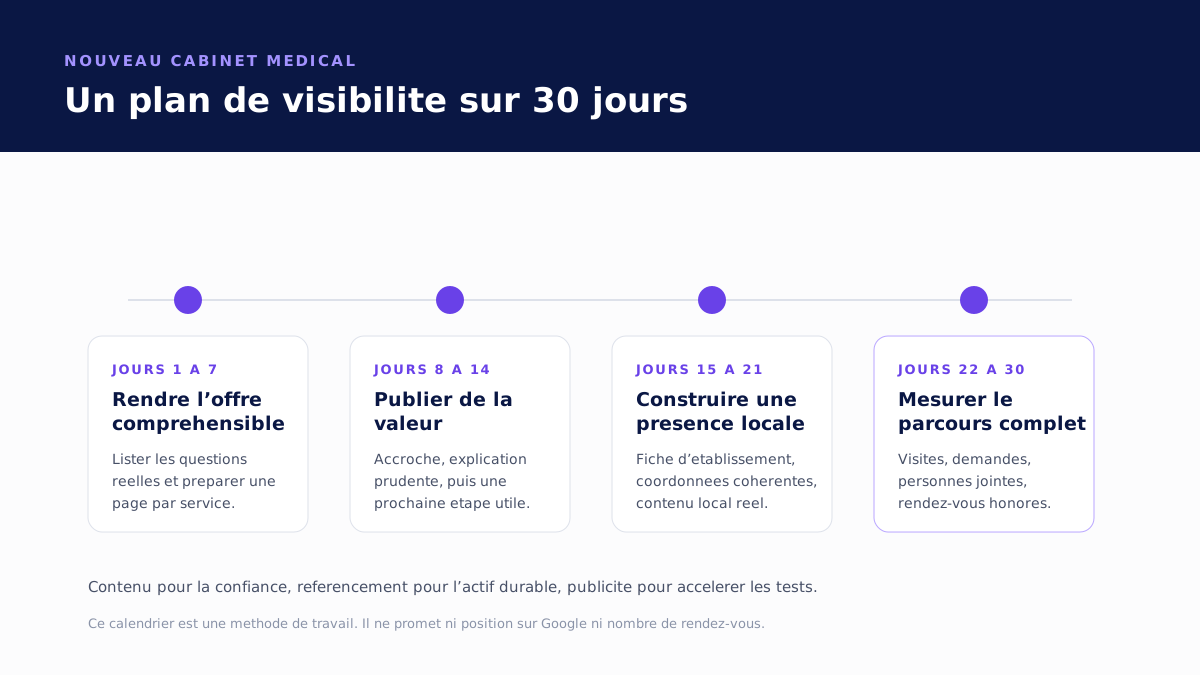
Days 1 to 7: make the offer understandable
Start by writing down the questions the practice actually gets asked: reasons for a visit, what a first appointment looks like, required documents, preparation, hours, access, and situations that call for a consultation. Sort them by service.
Then prepare a clear page for each important service. Someone searching for a specific consultation should not have to decode a page that mixes together every service. Add an honest presentation of the practitioner, the address, contact details, and an unambiguous next step.
This step is explained service by service in the guide dedicated to service pages.
Create a page per treatmentDays 8 to 14: publish value
Content works particularly well for a doctor because their expertise answers questions people already have. A phone, understandable sound, and a few cuts are enough to get started. A useful video can follow three steps:
The goal is not to hold attention artificially. Storytelling techniques exist to get good information to the person who needs it. Avoid promising outcomes and avoid aggressive calls like "come to my practice."
Source: Creating helpful, reliable, people-first content, Google Search Central
Days 15 to 21: build a findable local presence
A web page becomes useful when it answers a specific search better than the alternatives. Organic search, often called SEO, refers to the work that helps a search engine understand a page and offer it in its unpaid results.
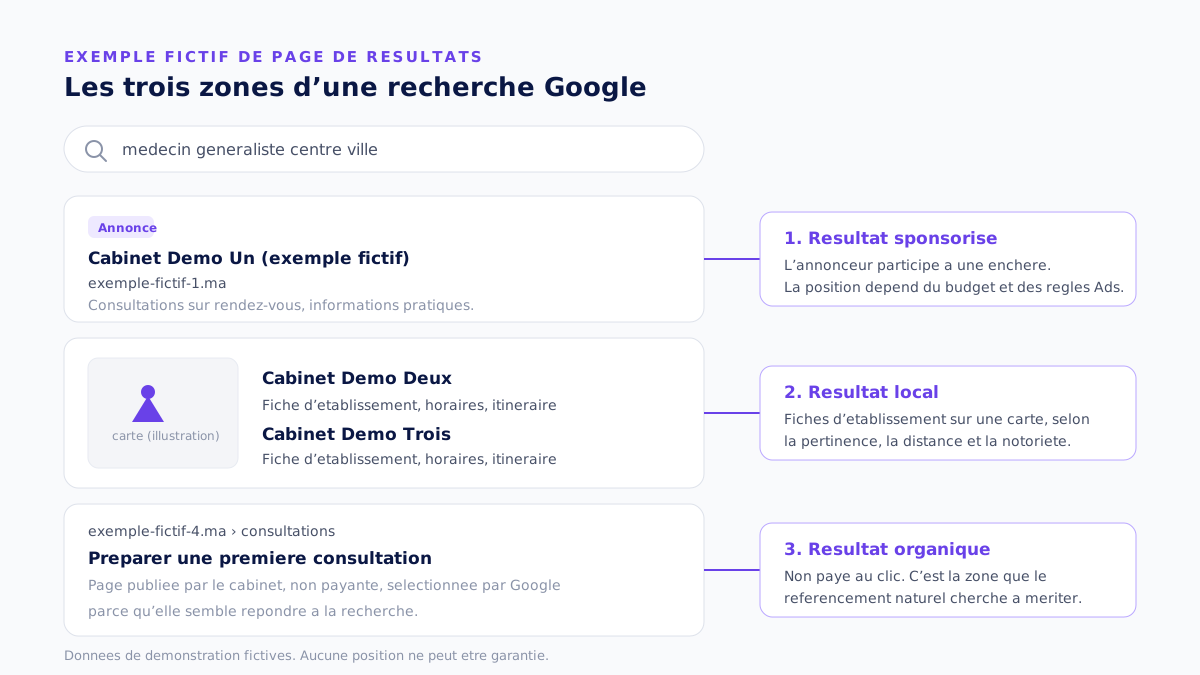
Three different spaces coexist on a Google results page, and it helps to know how to tell them apart before deciding where to invest. A sponsored result is an ad: the advertiser bids to appear there. A local result is a business listing shown on a map, selected in part by relevance, distance, and prominence. An organic result is not paid per click: Google offers it because it judges the page answers the search.
Create or complete the business listing, keep the name, address, and phone number consistent everywhere, then link each important service to a detailed page. Check mobile display and speed. Add genuine local content: service area, access, landmarks, and practical information. Do not create dozens of identical pages where only the city name changes: Google treats that kind of doorway page as an abusive practice when they mainly exist to capture similar queries.
Days 22 to 30: measure the full pathway
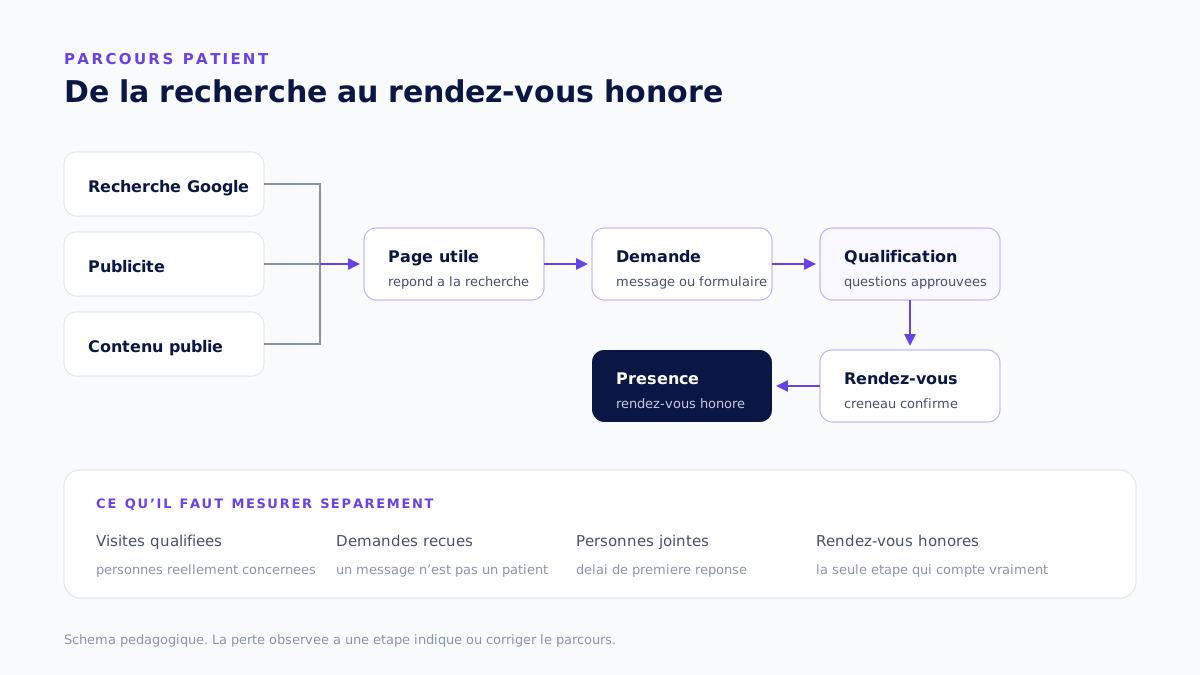
Visibility only has value if the demand it generates can be handled. The word "funnel" simply describes the sequence of steps between a first visit and a completed appointment. Measure these steps separately:
A Meta or Google campaign can speed up learning, but it does not fix a confusing page or a slow reply. Google usually reaches someone who has already formed a need. Meta interrupts someone who was not necessarily searching at that moment. These are different levels of intent, not a "good channel" versus "bad channel" split. People sometimes call demand "warm" when the person already recognizes their need, and "cold" when they discover the topic without searching for it.
Which path should you choose?
If you are willing to create content, start even before opening when possible. If you do not want to appear on camera, publish guides, diagrams, written answers, and service pages. If you need data faster, test a limited campaign with a page and serious tracking.
The best system gradually combines all three: content for trust, SEO for a lasting asset, advertising to speed up testing.
| Path | What it brings | Detailed guide |
|---|---|---|
| Video content | Trust, built from real patient questions | Create medical content with a smartphone |
| Content without a camera | Lasting visibility without filming yourself | Build visibility without appearing on video |
| Website and local SEO | A findable asset over time | Build a medical website for local search |
| Paid advertising | Faster data, on a limited budget | Google Ads or Meta Ads for a practice |
| Handling requests | Fewer lost requests after the click | Turn digital requests into appointments |
Next step
Take inventory of your services, your frequently asked questions, and your appointment pathway. Forteuno Web can then run a diagnostic of this foundation and point out where a local website, better qualification, or automation can reduce losses, with no guarantee of ranking or business outcome.
Continue exploring
Resource
How can you attract patients with medical content, with no studio and no professional camera?
Useful medical content does not start with a professional camera. It starts with a good patient question and a clear answer.
Read itResource
Without Video, How Can You Make Your Practice Visible Through Service Pages, Guides, and Local SEO?
Video is a format, not an obligation. Service pages, written answers, and educational diagrams build a solid presence.
Read itResource
How can you improve your medical practice's ranking on Google in Morocco?
A beautiful website can still be invisible. Structure, local signals, and measurement matter more than graphic design.
Read itResource
How can you help each treatment your practice offers get found on Google?
Nobody searches for "all of a practice's services." They search for a specific answer, and a dedicated page handles that better.
Read itResource
How can you find an agency capable of improving your medical website's ranking?
A polished portfolio does not prove a site attracts qualified searches. Here is the evidence to ask for and the warning signs to watch for.
Read itResource
Google Ads or Meta Ads: which one can bring your practice more appointments?
Both channels can work, but they meet the person at different moments. The real comparison is cost per completed appointment.
Read itResource
How can you get your first patients through digital when you open your practice?
An ad produces forms, not patients. Here is the full path between someone discovering your practice and someone reassured enough to start care.
Read itResource
Why aren't your digital requests turning into appointments, and how can you convert them?
The problem is often what happens after the click: a slow reply, improvised questions, no status tracking, or confusion between qualification and medical advice.
Read itResource
How can you create medical content that attracts patients without feeling like an ad?
The "hook, value, useful next step" structure earns attention without exploiting fear or promising an outcome.
Read it