Resources/First patients in Morocco/How can you get your first patients through digital when you open your practice?
How can you get your first patients through digital when you open your practice?
An ad produces forms, not patients. Here is the full path between someone discovering your practice and someone reassured enough to start care.
Series
Part of our New medical practice in Morocco: how do you attract your first patients?resource series.
Mohamed Amine Saada, Forteuno Web
Published · Updated
Editorial status: Educational content. Should be validated by the healthcare professional and against the Order's rules before publication or any campaign.
You have opened your practice, but patients do not know you yet. You can be excellent in your specialty and still be invisible, simply because no relationship of trust exists yet between you and the people discovering your name online.
This is where a lot of new doctors get it wrong. They think launching an ad is enough. An ad can produce forms, messages, or calls. It does not automatically produce patients.
The real work is building the path between someone discovering your practice and someone reassured enough to start appropriate care.
I am going to walk you through this path based on an idea a well-known clinic owner in Casablanca shared with me. He was already using this logic to grow his digital activity around ten years ago.
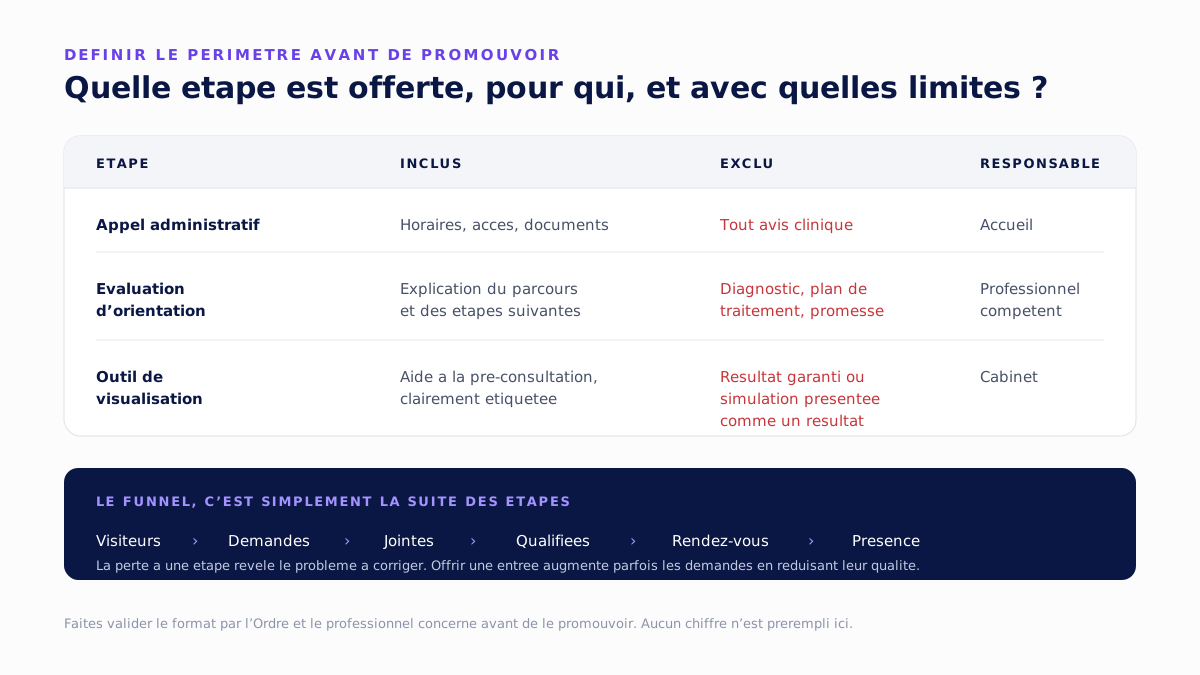
The ad did not promise a free consultation
The owner used Meta Ads to generate requests. People saw an ad on Facebook or Instagram, then filled out a form. He did not mention the free consultation in the ad itself.
If your ad immediately promises something free, it can attract people who are mainly interested in the free part. You then risk filling your calendar with profiles that do not match your service or are not ready to move forward.
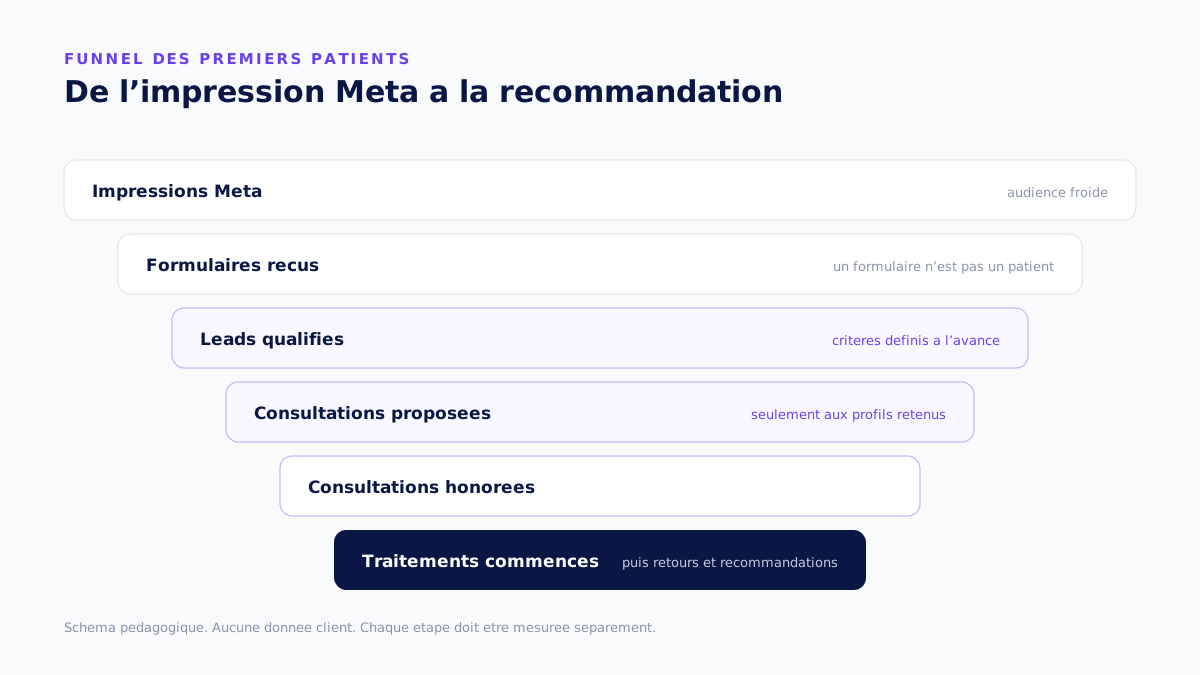
His system worked in this order:
The free consultation, then, was not the advertising bait. It was a benefit offered after qualification.
Why Meta usually produces colder leads
To understand this method, you need to understand the patient's journey.
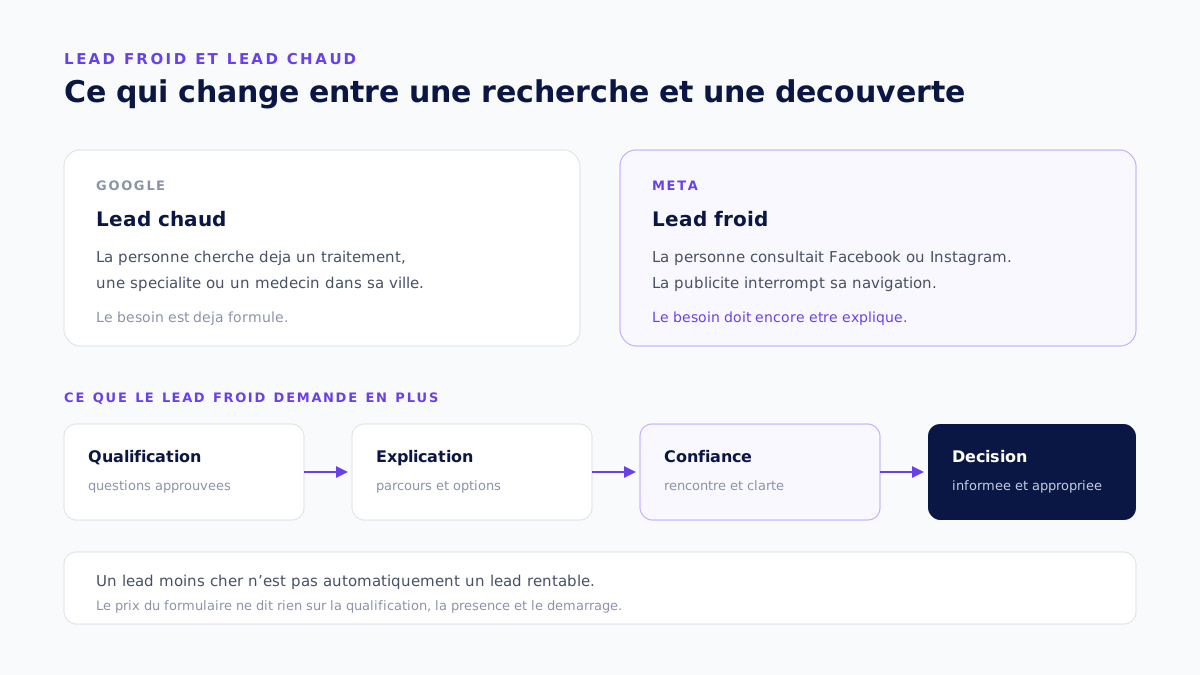
On Google, a person is already forming a search. They type the name of a treatment, a specialty, or a doctor in their city. Their need is already present in their mind, and they are actively looking for a solution.
On Meta, the person is browsing Facebook or Instagram. They were not necessarily looking for a doctor. Your ad interrupts their scrolling and draws their attention to a problem, a possibility, or a treatment.
This person is often called a cold lead. That does not mean they are a bad one. It simply means they need more explanation and trust before making a decision. A warm lead is already searching. A cold lead is discovering.
Meta leads can cost less while requiring more skill to convert. The price of the form does not tell you whether your campaign is profitable.
The form needs to protect your time
The form is not just there to collect a name and a phone number. It needs to help you understand whether the person fits the proposed pathway. The questions depend on the specialty, the treatment, and the practice's rules. They might cover:
The form should only ask for necessary data. It does not replace a consultation and should never lead someone to make a medical decision on their own.
The goal is simple: your team needs to know who to call back, with what context, and for what next step.
A free consultation creates an advantage when you are starting out
Picture the patient's situation. This person does not know you. They do not yet know whether they trust you. They may be afraid of the treatment, the price, the outcome, or simply of making the wrong decision.
Asking them to pay immediately adds a barrier before the relationship even exists.
When you offer a free consultation to someone already qualified, you remove part of that initial risk. You give them a chance to meet the professional, ask their questions, and understand their pathway.
An established practice can rely on its reputation, its former patients, and its referrals. A new practice does not have that advantage yet. The free consultation can become your temporary edge. You are investing time to speed up building trust.
The consultation also plays a sales role
Many doctors are uncomfortable with this idea, but it needs to be explained honestly. From a commercial standpoint, a consultation resembles a sales meeting. You listen to the person, you understand what is bothering them, you clearly show them the problem, and you explain how appropriate care can help.
That does not mean manipulating, exaggerating pain, or pushing an unnecessary treatment. A good consultation should let the patient:
Trust grows because the patient receives what they needed: clarity.
“Any adaptation must respect professional rules, the specialty, and the applicable obligations. A consultation remains a professional act, even when its role in the pathway also has a commercial dimension.”
Source: Code of medical ethics, Conseil national de l'Ordre des médecins du Maroc
This system runs on the numbers
The clinic owner was not thinking in terms of one exceptional patient. He was thinking in percentages. Out of a given number of requests:
The full funnel runs from Meta impressions to forms, then to qualified leads, offered consultations, completed consultations, treatments started, return visits, and finally referrals.
| What you calculate | Formula |
|---|---|
| Patients gained | Leads x qualification rate x attendance rate x start rate |
| Real acquisition cost | Advertising + team follow-up + cost of free consultations |
| Value created | Initial treatments + future visits + value attributable to referrals |
The result does not depend on every consultation turning into treatment. It depends on how the whole group performs.
A purely hypothetical example
Suppose 100 people fill out the form. Thirty match the criteria. Twenty come to the consultation. Eight start care.
These numbers are neither a promise nor the Casablanca clinic's actual results. They only illustrate the calculation.
The practice then needs to measure how many of these patients come back and how many new patients arrive through their referrals. That is how you move from a simple cost-per-lead figure to the system's real value.
Your team determines whether Meta leads become profitable
A cold audience needs more skill than a warm one. If your team calls back without understanding the context, replies late, or recites a generic script, a large share of the leads will be lost. You might conclude Meta does not work when the problem actually sits after the form.
Before launching the campaign, prepare:
A campaign does not replace a process. It simply increases the number of people entering that process.
The detail of statuses, response times, and follow-ups is explained in the guide on converting requests.
Turn requests into appointmentsWhen you are starting out, your availability becomes an advantage too
The same principle exists with no advertising at all. Picture the day after Eid. Several practices are closed. Someone is looking for a doctor and finds you because you chose to be available.
That might be the only reason they discover you. But if they receive good care, they may come back later or tell their family about you.
The logic stays statistical. Not everyone will come back. Not everyone will refer you. But some will, and that opportunity would never have existed if you had adopted, from day one, the same approach as an already-established practice.
When you are starting out, you sometimes have to accept a constraint you will no longer accept once your schedule fills up. This difficult period is not permanent. It builds the foundation that will later let you protect your time and become more selective.
The plan to apply
Adapting the system to each specialty
The logic stays the same, but qualification and the consultation need to change depending on the page.
For a dental practice, the consultation can help the patient understand a treatment, its pathway, and the possible options. SmileGen can provide a pre-consultation visualization, without becoming a diagnosis, a treatment plan, or a guarantee of outcome.
For dermatology, aesthetic medicine, ophthalmology, or another specialty, the questions, criteria, and limits need to be defined by the professional concerned. The specialty's name should never be the only element that gets swapped out.
You can build this system yourself
Start with one service, one campaign, and one form. Measure every step before raising the budget.
If you would like support, Forteuno Web can help you build the landing page, qualification, follow-up, and automation around your practice's actual procedures.
Continue exploring
Resource
New medical practice in Morocco: how do you attract your first patients?
Three complementary assets for a practice open less than two years: an educational presence, a useful website, and a well organized contact pathway.
Read itResource
Google Ads or Meta Ads: which one can bring your practice more appointments?
Both channels can work, but they meet the person at different moments. The real comparison is cost per completed appointment.
Read itResource
Why aren't your digital requests turning into appointments, and how can you convert them?
The problem is often what happens after the click: a slow reply, improvised questions, no status tracking, or confusion between qualification and medical advice.
Read itResource
How can you create medical content that attracts patients without feeling like an ad?
The "hook, value, useful next step" structure earns attention without exploiting fear or promising an outcome.
Read it