Resources/First patients in Morocco/How can you improve your medical practice's ranking on Google in Morocco?
How can you improve your medical practice's ranking on Google in Morocco?
A beautiful website can still be invisible. Structure, local signals, and measurement matter more than graphic design.
Series
Part of our New medical practice in Morocco: how do you attract your first patients?resource series.
Mohamed Amine Saada, Forteuno Web
Published
Editorial status: Educational content. Should be validated by the healthcare professional and against the Order's rules before publication or any campaign.
A beautiful website can still be invisible. An optimized website starts with a structure that matches patients' questions and the services actually provided.
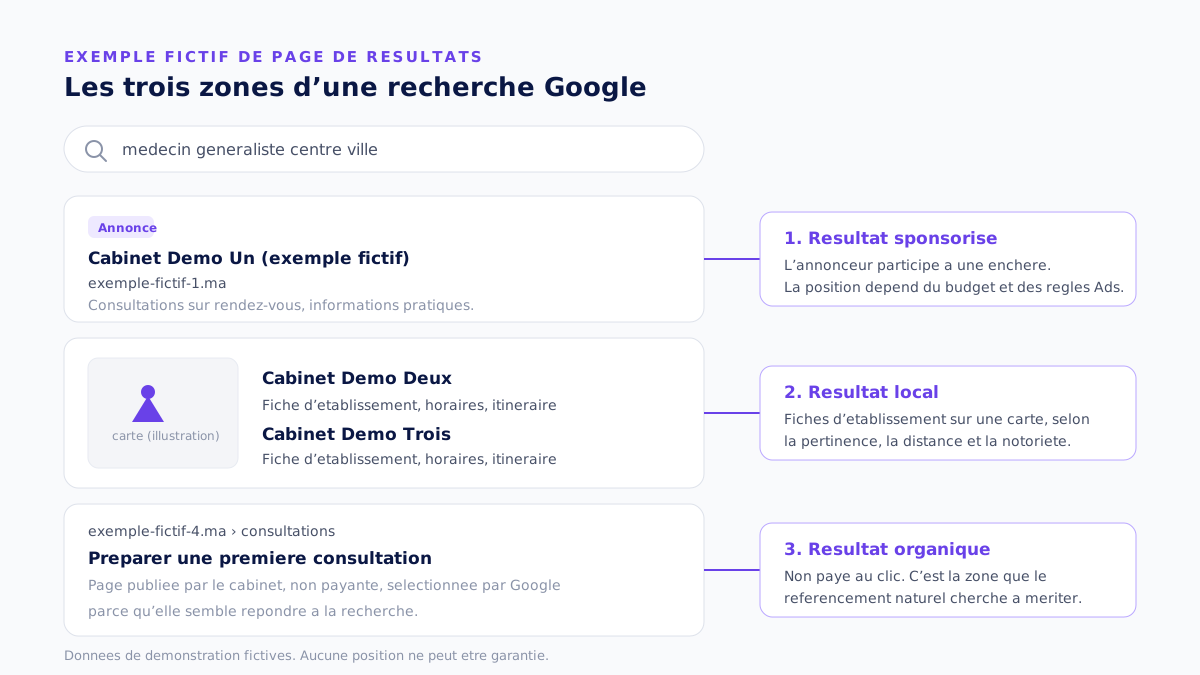
The three zones of a Google search
SEO mainly works on how understandable and useful the organic results are, while also strengthening the consistency of the local presence. Nobody can honestly guarantee the first spot.
Source: Difference between ads and organic results, Google Ads Help
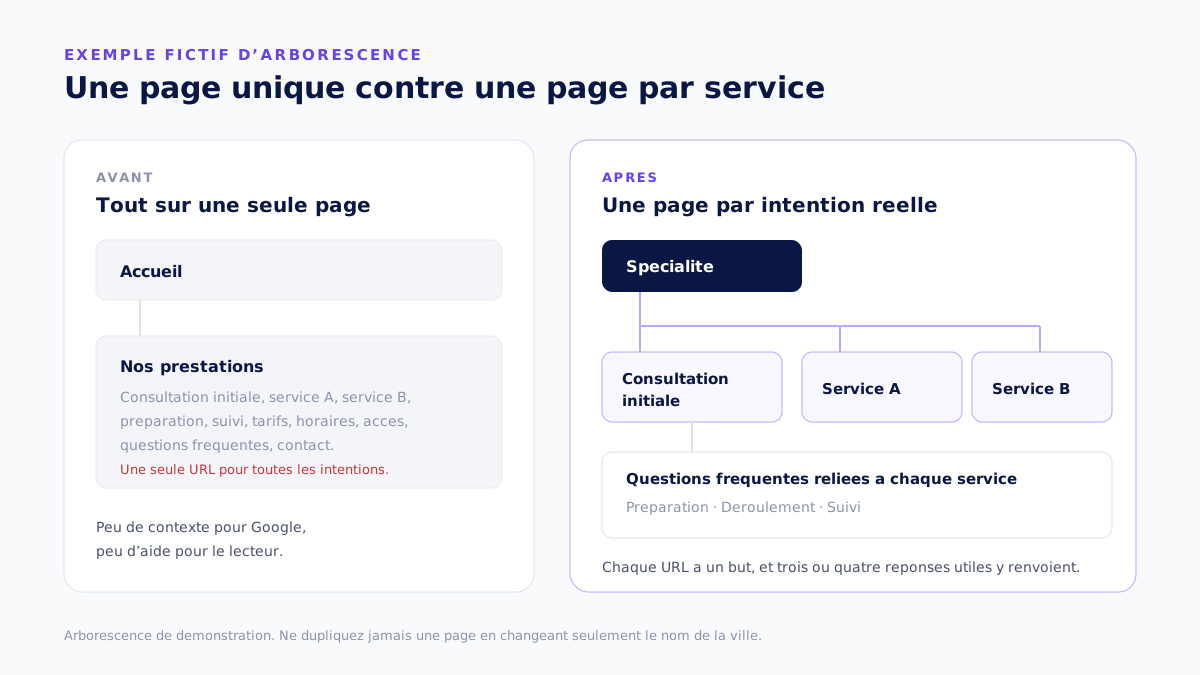
The minimal structure
Every URL needs a purpose. A service page explains who it is for, what might prompt a consultation, the general steps involved, the limits of information found online, and how to request an appointment.
Local signals
Use the same name, address, and phone number everywhere. Complete the Google listing with accurate categories and up-to-date hours. Only mention cities or areas you genuinely serve. A remote-only business should not invent a local office.
The pages "doctor in Casablanca," "doctor in Rabat," and "doctor in Marrakech" cannot be three copies of each other. Each one needs to reflect a presence, access details, demand, examples, and constraints that genuinely belong to that area. Otherwise, publish a transparent service-area page instead.
Technical basics, explained simply
A site needs to load fast on a phone, use HTTPS, offer understandable titles, and be accessible to search engines. Structured data are tags in the code that help identify the organization, the article, or the service; they do not guarantee a better ranking.
Measuring the right results
Search Console shows organic queries, impressions, and clicks. The analytics tool shows behavior on the site. The appointment system shows qualified requests. Connecting all three avoids judging a site purely on visitor count.
| Metric | Question it answers | Where to read it |
|---|---|---|
| Impressions | Is Google showing the page? | Search Console |
| Organic clicks | Do the title and description make people want to open it? | Search Console |
| On-page behavior | Does the page really answer the question? | Analytics tool |
| Requests received | Is the contact pathway understandable? | Form or messaging |
| Appointments kept | Does the work produce a real outcome? | Practice calendar |
Once the structure is in place, converting incoming requests becomes the most common limiting factor.
Turn requests into appointmentsNext step
Request an audit of the current structure: missing pages, technical issues, local content, and the appointment pathway. The diagnostic should lead to priorities, not a promise of a position.
Continue exploring
Resource
New medical practice in Morocco: how do you attract your first patients?
Three complementary assets for a practice open less than two years: an educational presence, a useful website, and a well organized contact pathway.
Read itResource
How can you help each treatment your practice offers get found on Google?
Nobody searches for "all of a practice's services." They search for a specific answer, and a dedicated page handles that better.
Read itResource
How can you find an agency capable of improving your medical website's ranking?
A polished portfolio does not prove a site attracts qualified searches. Here is the evidence to ask for and the warning signs to watch for.
Read it