Resources/First patients in Morocco/Google Ads or Meta Ads: which one can bring your practice more appointments?
Google Ads or Meta Ads: which one can bring your practice more appointments?
Both channels can work, but they meet the person at different moments. The real comparison is cost per completed appointment.
Series
Part of our New medical practice in Morocco: how do you attract your first patients?resource series.
Mohamed Amine Saada, Forteuno Web
Published
Editorial status: Educational content. Should be validated by the healthcare professional and against the Order's rules before publication or any campaign.
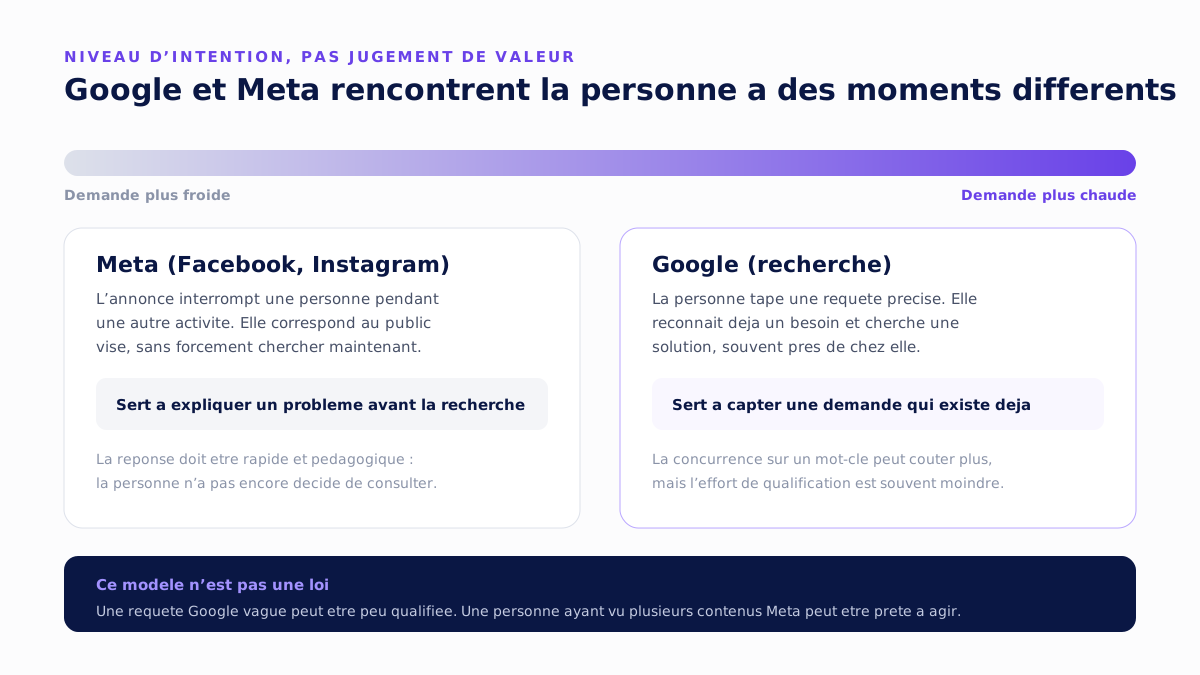
Both channels can work, but they meet the person at different moments.
Someone typing a specific query into Google is already showing intent. They are often called "warmer": they recognize a need and are actively looking for a solution. On Facebook or Instagram, the ad reaches a person during another activity. They are often "colder": they may fit the target audience without searching right now.
This model is not a law. A vague Google query can be poorly qualified; a person who has seen several pieces of Meta content can be ready to act.
Google: capturing existing demand
Google suits active, local searches. Competition on a keyword can raise the cost, but a clearer intent can reduce the qualification effort. The landing page needs to answer the exact query and explain the next step.
Meta: building attention and trust
Meta lets you explain a problem, an approach, or a value before the search even happens. A simple image, educational content, or a demonstration can generate a request. Follow-up needs to be fast and educational, since the person has not always decided to seek care.
Before-and-after images, testimonials, and health-related targeting can fall under professional rules, privacy law, and platform policy. They require specific validation; an AI-generated image does not remove these obligations.
The real comparison: cost per completed appointment
Do not compare only the cost of the form. Track spend divided by number of requests, then requests multiplied by contact rate, qualification rate, booking rate, and attendance rate.
Purely hypothetical example: 100 requests, of which 70% are reached, 50% qualify, 60% book, and 80% show up, produce 16.8 completed consultations. This calculation is meant to identify the weak point; it does not predict your result.
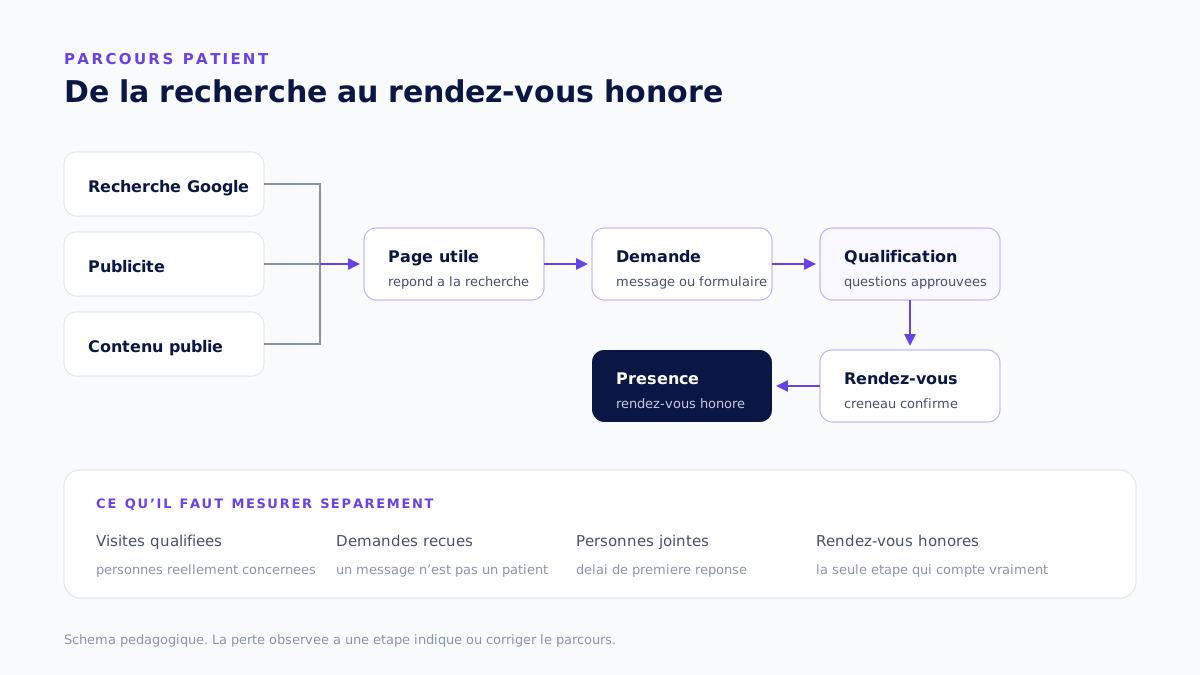
Starting cleanly
Choose one service, one city you genuinely serve, one page, one message, and a limited budget. Define qualification criteria and response time in advance. Compare both channels on the same final unit.
A campaign does not fix a slow reply: handling incoming requests needs to be ready before the first dollar is spent.
Turn requests into appointmentsNext step
Request an audit of the ad, page, conversation, then appointment pathway. Forteuno Web can then propose the landing page, tracking, or agent suited to the practice's process.
Source: Difference between ads and organic results, Google Ads Help
Source: Code of medical ethics, Conseil national de l'Ordre des médecins du Maroc
Continue exploring
Resource
New medical practice in Morocco: how do you attract your first patients?
Three complementary assets for a practice open less than two years: an educational presence, a useful website, and a well organized contact pathway.
Read itResource
Why aren't your digital requests turning into appointments, and how can you convert them?
The problem is often what happens after the click: a slow reply, improvised questions, no status tracking, or confusion between qualification and medical advice.
Read itResource
How can you get your first patients through digital when you open your practice?
An ad produces forms, not patients. Here is the full path between someone discovering your practice and someone reassured enough to start care.
Read it